 i
iIf you have started collecting kitchen ideas and pricing them against Bay Area realities, you already know the gap can be wide. Homeowners often ask, how much does a kitchen remodel cost, expecting a single number. The honest answer is that the range depends on layout changes, finish level, structural conditions, and how carefully the project is designed before construction begins.
In the Bay Area, a kitchen remodel can land anywhere from a focused cosmetic upgrade to a fully reimagined space with custom cabinetry, new systems, and permit-driven structural work. That spread is not about vague pricing. It reflects real differences in scope, materials, labor complexity, and the age of the home.
How much does a kitchen remodel cost in the Bay Area?
For many Bay Area homes, a kitchen remodel starts around $45,000 to $75,000 for a smaller, mostly cosmetic project. A mid-range remodel often falls between $75,000 and $125,000. A high-end kitchen remodel with custom cabinetry, premium appliances, layout changes, and detailed finish work can move from $125,000 to $250,000 or more.
Those numbers are broader than national averages for a reason. Local labor costs are higher. Permit requirements can be more involved. Older homes in San Francisco, San Mateo, Santa Clara, and Alameda counties also tend to reveal hidden conditions once demolition begins, from outdated wiring to framing that no longer meets current standards.
The most accurate way to think about cost is not by asking what a kitchen should cost in theory, but what your kitchen needs in order to function better, look better, and add value without introducing unnecessary construction risk.
What actually drives kitchen remodeling costs?
The biggest cost driver is scope. If you keep the existing layout and replace surfaces, fixtures, and appliances in roughly the same locations, your budget works much harder. Once you start moving plumbing lines, gas connections, walls, or windows, the project becomes more labor-intensive and more design-dependent.
Cabinetry is usually one of the largest line items. Stock cabinets cost less, semi-custom gives more flexibility, and custom cabinetry delivers the highest level of fit, storage planning, and finish control. In many Bay Area kitchens, custom or highly tailored cabinetry makes sense because older homes rarely offer perfectly standard dimensions. That said, it is also one of the fastest ways to increase the total investment.
Countertops, backsplash materials, and appliances also have a strong effect on pricing. Quartz is popular because it balances durability and aesthetics. Natural stone can elevate the kitchen, but slab selection, fabrication details, and edge treatments can shift the budget quickly. Appliance packages vary just as dramatically. A practical suite may fit comfortably into a moderate budget, while built-in refrigeration, professional-style ranges, and integrated ventilation can add tens of thousands.
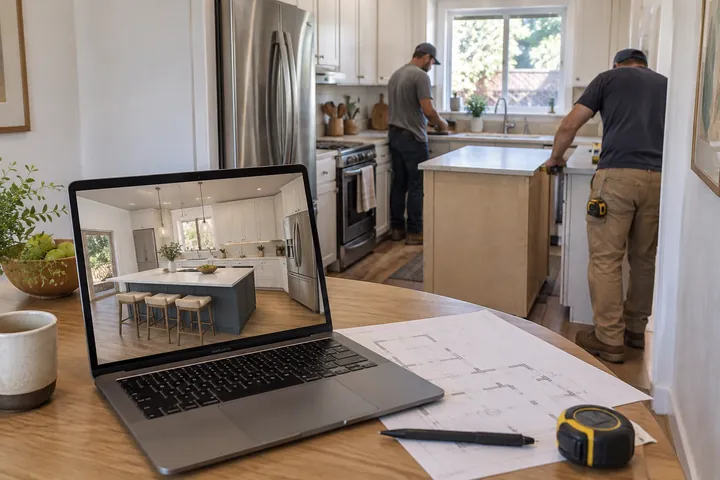
Then there is the cost homeowners do not always see coming at first – pre-construction planning. Measured drawings, 3D design, engineering coordination, and permit preparation all add cost upfront, but they usually reduce larger surprises later. In a complex market like the Bay Area, thoughtful planning is not fluff. It is budget protection.
Cost ranges by remodel type
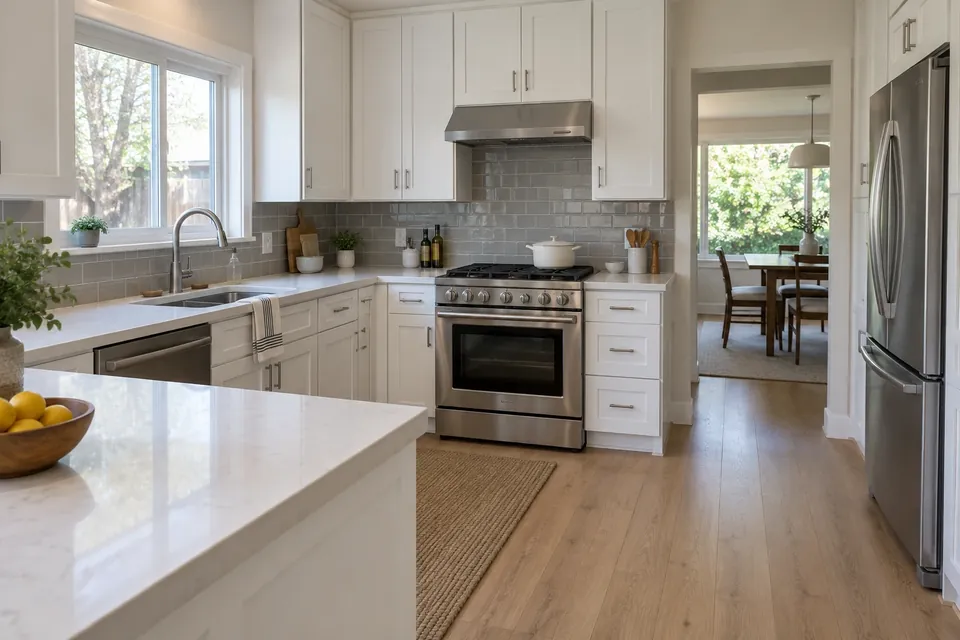
A cosmetic kitchen remodel usually focuses on what is visible. Think cabinet refacing or replacement without major layout change, new countertops, updated flooring, tile backsplash, lighting, plumbing fixtures, and appliance replacement. This route can transform the room if the current layout already works well.
A mid-range remodel often includes new semi-custom or custom cabinetry, upgraded surfaces, better lighting design, improved storage, and selective changes to the kitchen footprint. Maybe the island gets resized, a pantry is added, or the flow to the dining area is improved. This is where many homeowners find the best balance between design impact and resale value.
A high-end remodel is closer to rebuilding the kitchen as a fully personalized environment. That may include removing walls, relocating plumbing and electrical, installing custom millwork, integrating smart appliances, adding large-format windows or doors, and refining every finish detail. These projects can be beautiful and deeply functional, but they require more coordination, more approvals, and a bigger contingency.
Why older Bay Area homes cost more to remodel
Many Bay Area properties were built decades ago, and kitchens often sit at the intersection of outdated systems and modern expectations. You may open walls and find knob-and-tube wiring, undersized electrical panels, aging galvanized plumbing, poor insulation, or framing that needs reinforcement.
These are not glamorous upgrades, but they matter. A kitchen is one of the most infrastructure-heavy rooms in the home. It depends on power, ventilation, plumbing, lighting, and code-compliant circulation. If the house needs system upgrades to support the new kitchen, that work becomes part of the real project cost.
This is one reason design-build planning is so valuable. When a remodeling team studies the home carefully before construction, the pricing becomes more grounded in existing conditions rather than wishful assumptions.
Should you keep the layout or change it?
If budget discipline is a top priority, keeping the sink, range, and dishwasher close to their current locations is usually the smartest move. Plumbing and gas relocations add labor, inspections, and often patching work in adjacent areas.
Still, there are times when a layout change is worth every dollar. If the kitchen cuts off natural light, wastes square footage, or creates daily friction for a busy family, a smarter plan can improve quality of life in a lasting way. The right question is not whether change costs more. It does. The better question is whether the new layout solves enough functional problems to justify that added investment.
How to budget for a kitchen remodel without getting blindsided
Start with a total comfort number, then separate it into three layers: core construction, finish selections, and contingency. That approach gives you a clearer picture of where the money is going and where adjustments can be made.
Your contingency matters. For older homes, a reserve of 10 to 20 percent is often appropriate, depending on how invasive the remodel will be. If walls are staying closed and systems are fairly current, the lower end may be enough. If the project includes demolition, structural work, or major reconfiguration, more cushion is wise.
It also helps to prioritize early. Decide what matters most before construction starts. For some homeowners, that is cabinetry quality. For others, it is appliance performance, an expanded island, or a cleaner indoor-outdoor connection. When priorities are clear, value engineering becomes more strategic and less emotional.
The cheapest bid is not always the best value
Kitchen pricing can vary sharply from one contractor to another, especially when scopes are not equally detailed. A low number may exclude design development, permit support, finish-level assumptions, or the real cost of managing older-home conditions.
That does not mean the highest proposal is automatically right either. What matters is transparency. A well-built estimate explains what is included, where allowances apply, and what variables could affect final cost. It should also reflect a process for communication, scheduling, and decision-making.
For homeowners investing serious money in a kitchen, trust is not a soft factor. It is part of cost control. Clear drawings, realistic pricing, and upfront communication tend to produce better outcomes than rushed estimates attached to vague promises.
How much does a kitchen remodel cost when design is part of the process?
When design is integrated from the start, the initial investment can appear higher than a simple construction-only quote. But that design work often protects the overall budget by resolving details before the build begins. Cabinet layouts get tested. Appliance clearances are confirmed. Lighting plans align with the way the family actually uses the room. Permit requirements are addressed earlier, not after work is underway.
For a high-value asset like a Bay Area home, that process usually makes sense. A kitchen is not just a room with cabinets. It is one of the most used spaces in the house, one of the strongest drivers of perceived home value, and one of the hardest spaces to renovate well without disciplined planning.
At Clever Design & Remodeling, that is why kitchen projects are approached as both a design opportunity and a construction responsibility. The goal is not simply to produce a beautiful room, but to create a kitchen that feels personal, performs well, and is priced with clarity.
A helpful place to start is this: set your ideal budget, your walk-away number, and the two or three features you care about most. Once those are clear, the right kitchen plan becomes much easier to shape around your home, your priorities, and the way you want to live in it every day.
See a planning range for your own project in about a minute, then talk it through with a Clever designer.