
A countertop has to perform under the least glamorous conditions of daily life: hurried breakfasts, wet dish towels, acidic ingredients, hot pans, school projects, and the occasional glass of red wine. Yet it is also one of the largest visual surfaces in a kitchen. For homeowners weighing quartz versus natural stone countertops, the right decision is rarely about which material is universally better. It is about how your household lives, how you want the room to feel, and how much care you want your finishes to require over time.
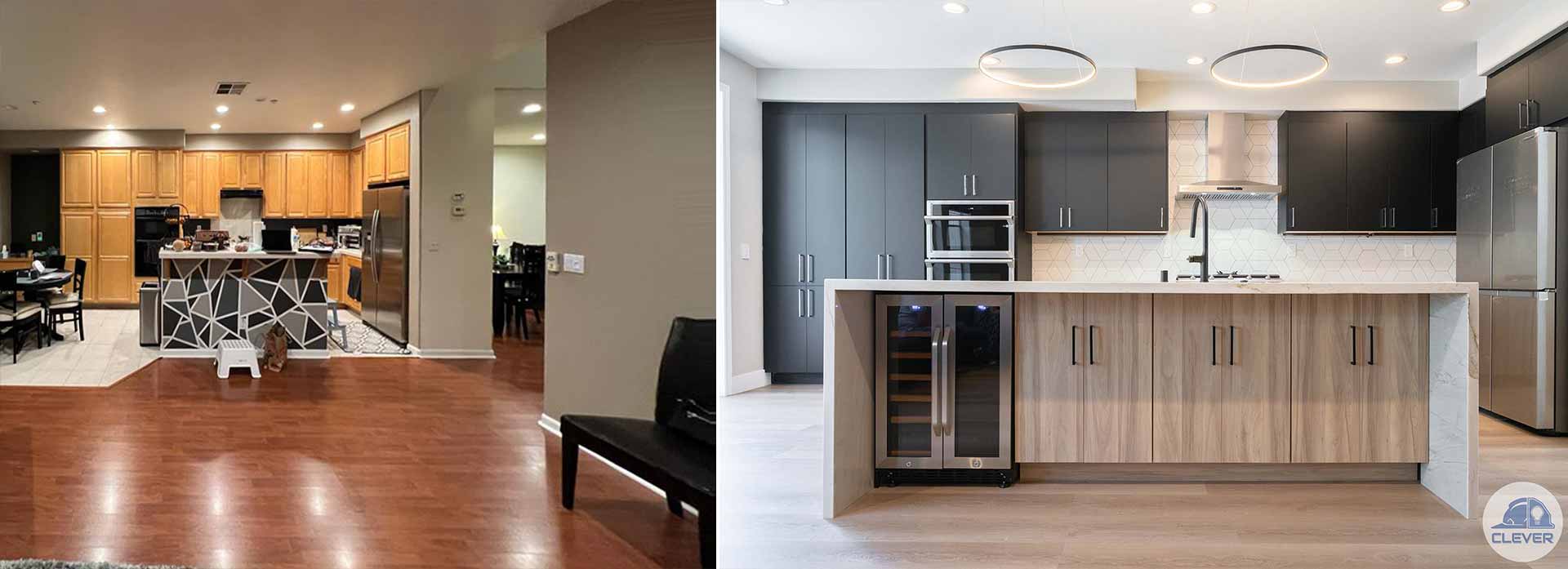
In a Bay Area renovation, that decision can carry extra weight. Many kitchens are being opened to living spaces, updated for entertaining, or designed around a more refined connection between cabinetry, flooring, and natural light. The countertop should support that larger vision without creating unwelcome maintenance surprises after construction is complete.
Quartz Versus Natural Stone Countertops: The Core Difference
Quartz countertops are engineered slabs. They are typically made from ground natural quartz combined with resins, pigments, and other materials, then manufactured for a consistent, nonporous surface. Natural stone, by contrast, is quarried from the earth and cut into slabs. Marble, granite, quartzite, soapstone, and limestone each bring their own mineral composition, movement, and maintenance profile.
That distinction affects nearly every practical consideration. Quartz gives homeowners predictability: repeatable color, a controlled pattern, and minimal sealing requirements. Natural stone offers geological variation that cannot be precisely replicated. A single slab can become the visual anchor of the kitchen, with veining, crystalline detail, and depth that make the room feel distinctly personal.
Neither choice is automatically more premium. A well-selected quartz can create an elegant, tailored kitchen, especially when paired with strong cabinet proportions and thoughtful lighting. A natural stone can be breathtaking, but it also asks the homeowner to accept variation and, in some cases, a patina that develops with use.
Daily Durability Is More Than a Scratch Test
Quartz is widely valued for its low-maintenance performance. Because it is nonporous, it resists staining from many common kitchen spills and does not generally need routine sealing. For families who cook frequently, have young children, or prefer a polished surface with little extra upkeep, that convenience is meaningful.
However, quartz is not invincible. The resin binders can be vulnerable to extreme heat, particularly when a hot pan is placed directly on the surface. Trivets are still a wise habit. Quartz can also chip along exposed edges if struck hard enough, and damage is not always invisible to repair.
Natural stone varies dramatically by type. Granite and quartzite are often chosen for their strength and relative resistance to scratching and heat. Many quartzites perform exceptionally well in hard-working kitchens, though every slab should be evaluated carefully because labeling and composition can vary. Marble is softer and more reactive to acids, meaning lemon juice, vinegar, or wine can etch its finish. Soapstone is forgiving around heat and develops a softer, darker character with age, but it can scratch more easily.
The most useful question is not, “Which surface is tougher?” It is, “What kind of wear can I live with?” A quartz surface may preserve a crisp, uniform look for years. Honed marble may record the life of the kitchen in subtle etches and marks. Some homeowners see that as a flaw; others see it as the point.
Stains, etching, and the reality of maintenance
Staining and etching are often confused, but they are different. A stain changes the color of a surface when a substance is absorbed. Etching changes the finish itself, often leaving a dull spot after acidic contact. Marble is particularly susceptible to etching, even when sealed. Sealer helps slow absorption; it does not make reactive stone chemically immune.
Quartz avoids most of these concerns, which is why it works well for clients who want easy cleanup and upfront certainty. Natural stone requires a more informed maintenance plan. Depending on the material, it may need periodic sealing, pH-neutral cleaners, and quick attention to spills. Those are manageable routines, not reasons to rule stone out, but they should be an intentional part of the selection.
Design Character: Controlled Consistency or One-of-One Movement
The visual decision can be as consequential as the practical one. Quartz has evolved far beyond the flat, speckled looks many homeowners remember. Current options include soft concrete finishes, quiet neutrals, dramatic veining, and warm, stone-inspired patterns. It is especially useful when a design calls for consistency across a large island, perimeter counters, or a full-height backsplash.
Natural stone has a presence that comes from its irregularity. Veins may shift across a slab, colors may change at the edges, and small natural fissures may be visible. When bookmatched at a backsplash or waterfall island, stone can read like a modern piece of art rather than simply a work surface.
This is where a design-led selection process matters. Looking at a small sample is not enough for either material, but it is especially risky with natural stone. View the actual slab in person, consider where seams will fall, and discuss how the pattern will move across the island, backsplash, and any waterfall panels. With quartz, confirm that slabs from the selected colorway have the scale and repeat pattern you expect.
Cost Depends on More Than the Slab Price
It is tempting to treat quartz as the budget-conscious option and natural stone as the luxury upgrade. In practice, there is substantial overlap. Entry-level quartz, premium designer quartz, common granite, rare marble, and high-demand quartzite can all occupy very different price ranges.
The installed cost is shaped by slab availability, thickness, fabrication complexity, edge details, cutouts, seams, transportation, and installation conditions. A large island with a waterfall edge can require additional material and skilled fabrication regardless of whether it is quartz or stone. Full-height backsplashes, mitered edges, and complicated layouts add labor as well.
For a remodel budget, it is smart to set an allowance early but avoid finalizing the design around a price per square foot alone. A material that appears affordable can become more expensive once the slab yield and fabrication details are known. Transparent planning should account for the complete installed scope, not just the showroom sample.
Resale Value and the Right Kind of Investment
High-quality countertops can support resale appeal, but buyers do not value material in isolation. They respond to a kitchen that feels cohesive, functional, and well maintained. A beautiful quartz selection in a thoughtfully remodeled kitchen can be more appealing than a delicate stone that appears stained or poorly coordinated.
Natural stone can be a compelling feature in a higher-end home, particularly when its selection feels distinctive and its installation is carefully detailed. Still, resale should not force a homeowner into a material that conflicts with everyday routines. A household that will worry constantly about marble may enjoy the kitchen less, even if the material photographs beautifully.
For rental properties or homes with a high volume of use, durable, low-maintenance quartz often provides a practical balance of appearance and ownership ease. For a primary residence designed around craftsmanship and individuality, natural stone may justify its added care through the experience it creates every day.
How to Make the Decision With Confidence
Begin with your real habits, not an idealized version of them. Consider whether you cook often, whether children or tenants will use the kitchen, how much direct sunlight reaches the counters, and whether you are comfortable with a finish that changes subtly over time. Then place full-size samples beside cabinet doors, flooring, backsplash materials, and paint selections. Color undertones that look neutral under showroom lighting can shift substantially in your home.
It also helps to decide where the drama belongs. A highly expressive quartzite or marble island may pair best with quieter perimeter counters. Conversely, a continuous quartz surface can make a compact kitchen feel composed and expansive. There is no rule that every countertop surface must be identical, provided the materials are selected with intention.
At Clever Design & Remodeling, countertop selections are best made within the larger design and planning process, where cabinetry, lighting, appliances, and fabrication details can be resolved before construction begins. That coordination protects both the visual result and the budget from last-minute compromises.
Choose the surface that supports the life you want in the kitchen: quartz when effortless upkeep and consistency matter most, natural stone when character and material authenticity are worth a little more attention. The best countertop is the one you will be glad to use, not merely admire from across the room.