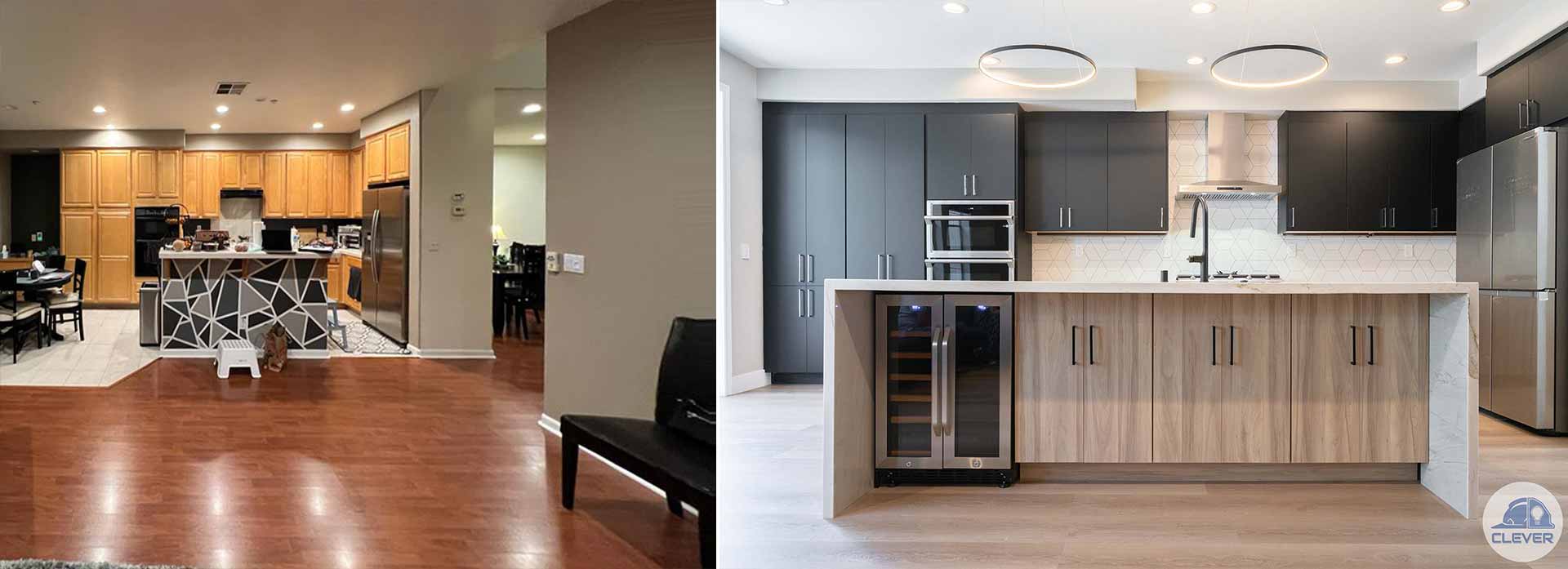

You’ve probably seen it: a neighbor’s kitchen finished in record time, the cabinets sitting perfectly flush, the lighting warm instead of harsh. Then you call a contractor and the first number you hear feels like a different planet.
A free remodeling estimate in the Bay Area can be a real advantage – or a fast way to collect vague ranges that don’t survive contact with permits, old plumbing, or a picky hillside foundation. The difference is how the estimate is built, what’s clarified upfront, and whether the contractor is protecting your budget and your home’s long-term value, not just trying to “get in the door.”
What “free remodeling estimate Bay Area” should actually mean
A free estimate shouldn’t mean a drive-by glance and a number tossed over the fence. In a region where older housing stock, strict permitting, and high labor costs collide, an estimate only becomes useful when it is tied to scope.
At minimum, a credible free estimate should include a clear description of what you’re remodeling (kitchen, bath, addition, ADU, whole-home), what level of finish you’re targeting, and what is assumed versus confirmed. If the estimate doesn’t state assumptions, you’re left holding the risk. That’s when a “$60k bathroom” becomes a $95k bathroom – and everyone acts surprised.
The most homeowner-friendly estimates also explain the decision points that change price. Not as a sales tactic, but as client advocacy: if you know what moves the needle, you can spend on what you’ll feel every day and simplify what you won’t.
Why Bay Area remodeling estimates vary so much
Two homes can share the same square footage and still live in completely different cost universes. That’s not contractor drama – it’s the reality of what’s behind the walls and what the city will require.
The house itself sets the baseline
A 1920s San Francisco home with lath-and-plaster, ungrounded wiring, and settling floors will estimate differently than a 1998 home in San Jose with open framing and newer systems. If you’re remodeling in a place where previous work was done without permits, a thorough contractor will flag it because it can impact what gets exposed and what must be corrected.
Permits and plan readiness are not “admin,” they’re risk management
In many Bay Area jurisdictions, the timeline and cost depend heavily on how permit-ready the project is. If you’re moving plumbing, touching structural elements, changing a building footprint, or building an ADU, your estimate should account for design, engineering coordination, and permit processing.
Some contractors quote only construction and treat permitting as an afterthought. That can look cheaper on day one and get expensive on day 60.
Finish level isn’t just taste – it’s labor and sequencing
Tile is a perfect example. A simple 4×4 ceramic tile installation is not the same as a large-format porcelain slab with tight grout lines, specialty edge profiles, and niche detailing. Both can be beautiful. The estimate should reflect what beauty you’re buying.
What a strong free estimate process looks like
A professional estimate process is structured because it has to protect you from guesswork. The best teams aren’t only thinking, “Can we build it?” They’re thinking, “Can we build it the way you want, within a budget you can live with, in a house that’s already lived a long life?”
1) A real conversation about priorities
Expect questions that feel personal to your home life: Who cooks? Do you host? Is aging-in-place a factor? Do you want a spa bath or a fast morning routine? Are you optimizing for resale in five years or planning to stay?
This isn’t fluff. Your answers shape layout, mechanical planning, and where to invest. A contractor who doesn’t ask will default to generic assumptions.
2) A site visit that looks beyond the finishes
A useful walkthrough includes access points, panel capacity, underfloor or attic conditions, water heater placement, venting options, and how materials will be staged. In the Bay Area, logistics matter – narrow driveways, shared walls, steep lots, and limited parking can all affect labor hours and schedule.
3) Scope clarity, then price clarity
A trustworthy free estimate ties the number to defined scope and allowances. If the estimate relies on phrases like “standard fixtures” or “basic electrical” without defining what those are, it’s not an estimate – it’s a placeholder.
For design-build projects, you may also see early conceptual pricing (a range) followed by more precise pricing after design decisions and engineering are set. That is normal. What’s not normal is pretending precision exists before the project is defined.
How to prepare so your estimate is accurate (and comparable)
You don’t need architectural drawings to request an estimate, but you do need to communicate clearly. A little preparation helps you avoid paying for surprises.
First, be honest about your budget comfort zone. Not because a contractor should “price to your budget,” but because there’s no value in designing a $250k kitchen when you wanted $130k. Transparent teams use budget as a design constraint, not a pressure point.
Second, collect a short list of inspiration that reflects your actual taste. Two or three reference images can be enough if they show materials, cabinet style, and lighting mood. This helps your contractor interpret “modern,” “warm,” or “clean” the way you mean it.
Third, document existing conditions: approximate room dimensions, known issues (leaks, cracking, low water pressure), and any previous work you suspect wasn’t permitted. You’re not confessing – you’re protecting your timeline.
Finally, decide what you’re willing to compromise on. If you want a larger island, are you open to fewer custom cabinets? If you want a steam shower, can you simplify tile selections? Trade-offs are where budgets stay disciplined.
Questions to ask before you trust an estimate
A free estimate is only valuable if it’s attached to accountability. These questions help you see whether you’re speaking with a disciplined builder or a charming guesser.
Ask whether the contractor is licensed, bonded, and insured, and whether they self-perform key scopes or rely entirely on subs. Clarify who manages the job daily and how communication works when decisions arise.
Then get specific: What is included in the price versus excluded? Are debris haul-away, floor protection, and final punch included? How are allowances handled if you choose fixtures above the assumed range? What triggers a change order?
Finally, ask what they need from you to keep the project moving. A strong contractor will tell you where homeowner selections, HOA approvals, and inspection timing can stall a schedule. That’s not blame-shifting – that’s transparency.
The hidden cost of “too fast, too cheap” estimates
A low estimate can be real, but it can also be incomplete. The Bay Area is one of the most punishing markets in the country for under-scoped projects because the corrections are expensive.
If an estimate ignores structural realities, you may pay later in framing fixes, leveling, or seismic upgrades. If it glosses over mechanical planning, you may face rework when ducts don’t fit, panels lack capacity, or vents can’t terminate where assumed. If it skips permit alignment, you may lose weeks waiting for revised drawings or corrections.
The right estimate doesn’t promise perfection. It shows you where uncertainty lives and how the team plans to reduce it before construction begins.
When “free” is enough – and when you need a deeper proposal
For straightforward cosmetic upgrades (new cabinets without moving plumbing, replacing finishes, swapping fixtures in place), a free estimate can be sufficient to make a decision.
For projects that change layout, add square footage, or introduce structural and engineering complexity, you may need a phased approach: an initial free estimate to confirm feasibility and budget alignment, then a more detailed design and pre-construction process that produces permit-ready plans and a tighter construction price. That extra step is often what separates a stressful remodel from a controlled one.
If you’re looking for a design-forward, permit-ready approach with transparent communication, Clever Design & Remodeling offers free consultations and estimates across the San Francisco Bay Area, pairing creative planning with disciplined construction execution.
A quick reality check on timelines and expectations
Estimates aren’t only about money – they’re about time. In the Bay Area, lead times for materials, inspection scheduling, and permit review can shape the experience as much as the construction itself.
A contractor who gives you an estimate without talking about timeline drivers is leaving out half the truth. You deserve to know what can be controlled (selection deadlines, decision cadence, scope definition) and what has to be managed (city review cycles, inspection availability, specialty fabrication).
The best remodels feel calm because the plan is calm. That starts with an estimate that treats your home like a long-term asset and your day-to-day life like the real jobsite.
If you want a free estimate, ask for one that respects the details. The number matters, but the thinking behind it matters more – because that’s what determines whether your remodel ends as a beautiful new space or a long lesson in “we didn’t know until we opened the wall.”