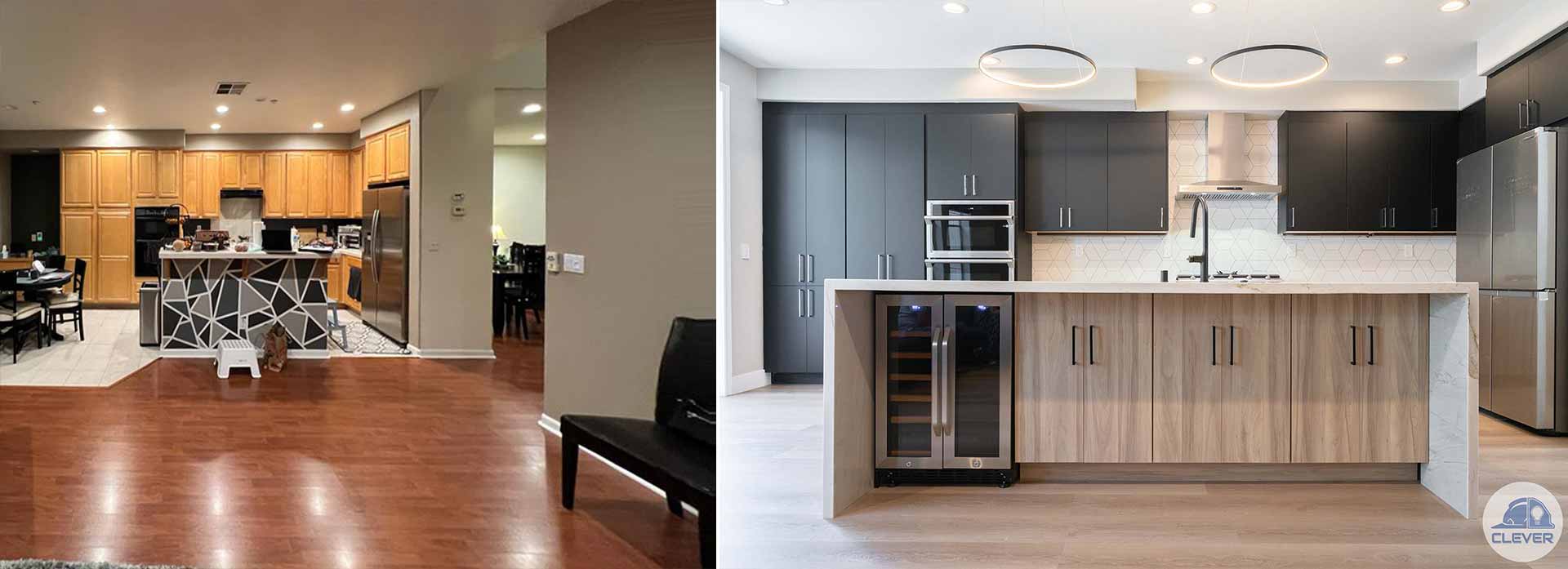

A beautiful remodel can begin with a practical question: how should you pay for it without putting unnecessary pressure on your household finances? The renovation loan versus home equity decision affects more than an interest rate. It can shape your project scope, the timing of permits and construction, your monthly payment, and the amount of equity you keep in a Bay Area home.
For a kitchen transformation, primary suite addition, ADU, or whole-home renovation, the right answer depends on your equity position, credit profile, project budget, and appetite for risk. The most useful approach is to decide on a funding path early, then align the design, engineering, permit, and construction plan around a budget you can support comfortably.
Renovation Loan Versus Home Equity: The Core Difference
A renovation loan is financing intended to cover home improvements. Depending on the lender and program, it may be unsecured, secured by the property, or structured around the home’s current and projected post-renovation value. Personal loans used for remodeling fall under this umbrella, as do specialized mortgage products that bundle a purchase or refinance with renovation funds.
Home equity financing, by contrast, uses the value you have already built in your home. A home equity loan generally provides one lump sum at a fixed rate. A home equity line of credit, commonly called a HELOC, provides a revolving credit line that you can draw from as needed, usually at a variable rate.
The distinction matters because the financing is built on different assumptions. A renovation loan may be a better fit when available equity is limited or when a lender can credit the planned improvements in its valuation. Home equity financing can be compelling when you have substantial equity and want access to lower rates than an unsecured personal loan may offer.
Neither option automatically makes a project affordable. Both require a clear construction budget that accounts for design, permits, materials, labor, and a reasonable contingency for conditions discovered after walls or floors are opened.
When a Renovation Loan May Make Sense
A renovation loan can be useful for homeowners who want to preserve existing equity or do not have enough equity to support a large HELOC or home equity loan. This is particularly relevant for owners who purchased recently, refinanced not long ago, or have seen only modest appreciation since buying.
Unsecured renovation loans are often faster to arrange than equity-based financing because the lender does not place a lien on the property. They can work well for a contained project with a predictable budget, such as a bathroom renovation, new decking, or a focused kitchen refresh. The trade-off is usually a higher interest rate and a shorter repayment period, which can create a noticeably larger monthly payment.
Specialized renovation mortgage products may offer another path for major work. Some can account for the expected value of an approved renovation, but they often require detailed contractor documentation, lender oversight, appraisals, draw schedules, and inspections. That structure can be worthwhile for a major acquisition-and-remodel project, but it requires strong pre-construction planning and patience with the lender’s process.
For a design-forward remodel, the benefit of this structure is discipline. A lender may require a defined scope, signed agreement, and documented draw process before releasing funds. The limitation is flexibility: late changes to cabinetry, finishes, or layout can require formal approvals or additional cash from the homeowner.
When Home Equity Financing May Be the Better Fit
Home equity financing is often attractive to established homeowners with meaningful equity, especially if they have a favorable first-mortgage rate they do not want to replace. A home equity loan gives you a known amount of money and a predictable fixed payment. That can make sense when construction pricing is well defined and you prefer certainty.
A HELOC offers more flexibility. Rather than borrowing the entire approved amount on day one, you draw funds when invoices are due. For a larger project with phased payments, that can reduce the interest paid during the early stages because interest generally accrues only on the amount drawn.
That flexibility comes with a caution. HELOC rates are commonly variable, so payments can rise if market rates increase. A homeowner who is comfortable with today’s payment should also test the budget against a higher rate. The draw period eventually ends, too, and the repayment terms may change substantially.
Home equity financing also puts your home on the line. Because the loan or line is secured by the property, missed payments carry greater consequences than an unsecured loan. For homeowners with stable income, strong reserves, and a long-term plan for the home, that risk may be acceptable. For others, a smaller scope or a longer savings period may protect both the project and the household.
Compare the Total Cost, Not Just the Rate
The lowest advertised rate is not always the least expensive choice. Ask lenders for the annual percentage rate, closing costs, appraisal fees, annual fees, origination charges, and any early closure or prepayment penalties. Also ask whether a HELOC rate is fixed or variable, how often it can adjust, and what its lifetime rate cap is.
A home equity loan may carry closing costs but provide payment stability. An unsecured renovation loan may have no appraisal or title-related costs, yet its interest rate can be much higher. A specialized renovation mortgage may have extensive documentation and closing requirements, but it could offer terms that make sense for a large, value-adding transformation.
It is also wise to separate financing costs from construction costs. A bid that looks manageable before financing can feel very different after monthly debt service is added. Build your payment into the same household budget that covers insurance, property taxes, maintenance, childcare, and other real obligations.
Match Financing to the Construction Process
Remodeling is not a retail purchase. Payments are tied to a sequence of work: design development, engineering, permit preparation, demolition, rough construction, inspections, finishes, and final completion. Your funding should support that sequence without forcing rushed decisions.
Before applying, develop enough of the project to understand its true range. In Santa Clara, San Mateo, and Alameda counties, permitting requirements and aging-home conditions can influence both the schedule and the budget. Electrical upgrades, foundation work, drainage corrections, or concealed plumbing issues are not always visible during an initial walk-through.
A thoughtful pre-construction process helps protect your financing plan. Detailed design renderings, material selections, engineering coordination, and permit-ready documentation make it easier to compare lender requirements against a realistic project cost. They also reduce the chance that a vague early estimate becomes an expensive mid-project surprise.
For substantial work, retain a contingency rather than borrowing to the absolute limit. The appropriate amount varies by project, but the principle is consistent: leave room for discoveries, owner-approved enhancements, and changes that improve the long-term performance of the home. A contingency is not a sign of poor planning. It is part of responsible planning in an existing structure.
Questions to Answer Before You Choose
Start with how long you expect to own the home. If you plan to stay for many years, a major remodel that improves daily living and long-term value may justify a longer financing horizon. If a move is likely soon, consider whether the scope and payment obligation align with your expected return and timeline.
Next, look closely at your existing mortgage. Homeowners with a low first-mortgage rate may prefer a HELOC or home equity loan rather than a cash-out refinance that replaces the entire mortgage at a new rate. Those with limited equity may find that a renovation loan or a phased project is more realistic.
Finally, consider your tolerance for variable payments and administrative complexity. A fixed-rate loan offers predictability. A HELOC offers flexibility but can change over time. A lender-managed renovation product can support a large, documented scope but may add coordination. The best fit is the option whose terms you understand fully and can carry comfortably even if the project takes longer than expected.
Build the Project Around Clear Decisions
Financing should support the home you want to create, not push you into compromises you will regret. At Clever Design & Remodeling, the most successful projects begin with candid conversations about priorities, investment range, and the decisions that will have the greatest effect on comfort, function, and enduring value.
Before committing to any loan, ask for written terms from more than one lender and review the construction scope with equal care. A well-planned remodel deserves funding that is just as intentional: clear enough to manage, flexible enough for the realities of construction, and aligned with the life you want to live in the finished space.